Leadership 5 min read
Power and Influence Are Part of the Job
Good work is mandatory but not enough. Reading notes on Pfeffer's Power, and why competence has to travel with influence.
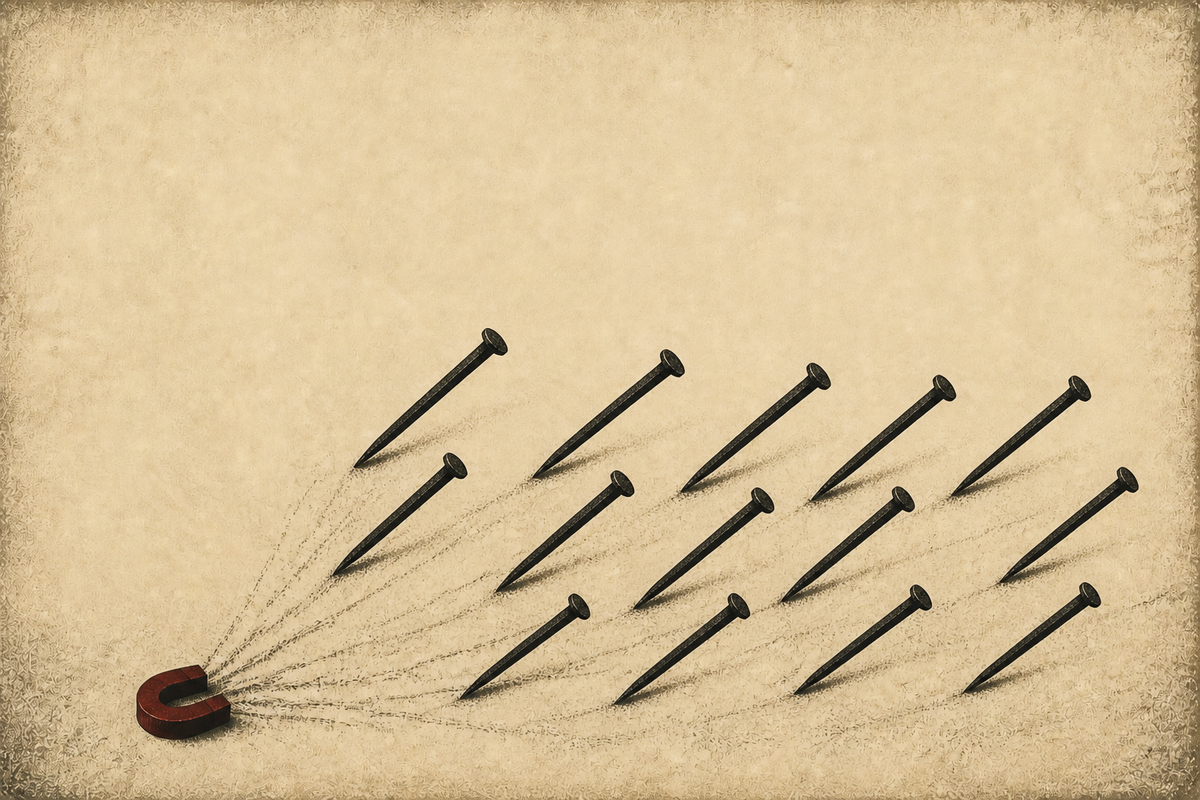
I used to apologize before I spoke. I paid no attention to my body language when presenting in the middle of a meeting — where I placed my feet, how much space I took at the table, what my hands were doing. It took me a few decades to understand that competence has to travel with influence, and that both feed trust. Without trust, you can't do what you said you were going to do, solve the problem, or produce the result. Your reputation, whether you like it or not, determines how effective you can be.
That is not what most of us were told.
These are my reading notes on Pfeffer's Power: Why Some People Have It—and Others Don't.
It is a meritocracy: be on time, work hard, follow the rules, avoid making waves, and your career will take care of itself. That is the advice many well-meaning parents, mentors, and managers give to people trying to climb the social and organizational ladder. It is not bad advice. But anyone who has spent enough time in business organizations eventually learns that this is not entirely true. To lead effectively and turn good ideas into real outcomes, people need to understand influence: who makes decisions, what those people value, how information moves, and why some contributions receive attention while others remain invisible.
Good work is mandatory but not enough
One of the hardest lessons in professional life is watching excellent work go unnoticed while less capable people seem to advance. You may assume that effort and ability automatically translate into influence. In organizations, leaders may reward the person who makes the project easier for them to understand, someone with stronger relationships with the decision-makers, or simply the person who is physically present when key decisions are made. This is the way things sometimes go.
An example that most have lived through or witnessed at some point in their careers is found in project dynamics. You have one manager who quietly fixes operational problems, always meets their deadlines, and is extremely supportive of their team. You also have another type of manager who performs competently, provides concise updates to senior leaders, and explains how the work impacts and advances the division's or organization's priorities. When it's time to promote or recognize, which of the two managers do you think will be easier to recall?
If your work creates value, do not assume that decision-makers will discover it by serendipity. Make the value clear. Explain the problem your work solved, the people it helped, the risk it reduced, the cost it avoided, or the organizational priority it advanced. It does not mean claiming credit for the work of others. In fact, strong leaders make their teams more visible first. They identify the contributors, explain the collective effort, and still take appropriate ownership for aligning people, making decisions, removing obstacles, and delivering the result.
Relationships are how work gets done
Many professionals treat networking as artificial and transactional. They imagine it as collecting contacts, making small talk, or seeking favors from people they barely know. None of that builds lasting influence. True networking is a system of trust, information sharing, and mutual assistance. It's about reciprocity. Forget the contact list and the people you message only when you want a favor. A useful network is a select group of colleagues, mentors, peers, or leaders who know you well enough to collaborate and exchange ideas. They see you as a problem solver as much as you see them as such.
Organizations do not run on formal reporting lines alone; the most important information moves informally. Decisions begin to take shape long before the meeting at which they are officially discussed. People with strong relationships are more likely to understand the context early enough to provide meaningful solutions before the official meeting or during the meeting itself. Being calculating is part of the game; thus, relationships and work go hand in hand.
Reputation creates opportunity
Most people think of reputation as the result of success. This is, in part, true, but it also shapes who gets the opportunity to succeed. Before your boss or a key figure gives you a difficult project, introduces you to senior leadership or other important people, or considers you for a larger role, they are determining what you are like, who you are professionally, and what your reputation is. Their consideration and judgment may be based on your track record, but it is also strongly shaped by what others say about you when you are not in the room.
Are you known as someone who stays calm under pressure? Someone who can work across teams? Someone who follows through on what they say? Someone who brings solutions rather than just identifying and complaining about the problems? Those impressions matter because leaders cannot personally observe everything. They ask others whom they trust. They remember who handled the last difficult assignment well. They take a chance on people whose reputation reduces uncertainty.
I can't overemphasize this enough, so I'll write it again: leaders take a chance on those whose reputation reduces uncertainty.
What kinds of uncertainty? All kinds: personal, professional, organizational, global. Being the person who comes to mind when seeking solutions to problems is a crucial component of reputation.
If you want to be viewed as strategic, connect your work to a larger organizational objective. If you want to be viewed as decisive, make a clear recommendation after completing the analysis. The delivery is just as important; attitude over aptitude always. If you want to be viewed as a leader, take responsibility for bringing people together when interests conflict.
Reputation is built through visible patterns of behavior. Above all, keep your word.
How you show up affects how you are heard
People draw conclusions about you based on how you show up. Period. The loudest person is like the dog that barks: rarely the most capable. When people have limited information, your clarity, composure, and decisiveness are crucial in determining whether you will be called upon to become the problem solver or not, whether you are going to be the person at the other side of the red phone. These traits affect whether others see you as someone who can be trusted with responsibility.
Many capable professionals unintentionally weaken their own message by apologizing before speaking, over-qualifying every opinion, or presenting a problem without offering a recommendation.
Compare these two approaches:
"My apologies, I may be wrong, but perhaps we could consider changing the process."
Versus:
"I see a risk in our current SOPs. I recommend we simplify the approval process, clarify who owns which parts, and review the results after 30 days to make sure the changes are solving the problem."
The second person may not know more. But they have made it easier to evaluate and act on. Showing up with authority requires no pretending to be certain when you are not. It requires being precise about what you know, what you do not know, and what you recommend next. Once more: attitude over aptitude.
There is a meaningful difference between saying, "I have no idea," and saying, "We do not have enough information to make that decision. Here is what we need to know before we proceed."
Ethical people need influence, too
Power is a tool, and like any tool, it can be used irresponsibly. It can be used to protect weak ideas, hoard credit, silence dissent, and reward loyalty over competence. But it can also be used to secure resources for a team, challenge an unfair policy, elevate overlooked talent, improve broken processes, and make a good idea more likely to be considered for implementation.
Good work matters. Character matters. Results matter.
When professionals decide that "politics is beneath them," the politics carries on with or without them, often in the hands of people who may have fewer reservations about using influence poorly. A leader who wants to make better decisions for his team and the organization needs more than a correct opinion; they need relationships, credibility, visibility, access, and the ability to persuade others.
In other words, they need power.