Operations 3 min read
While Others Compete, Own Your Corner
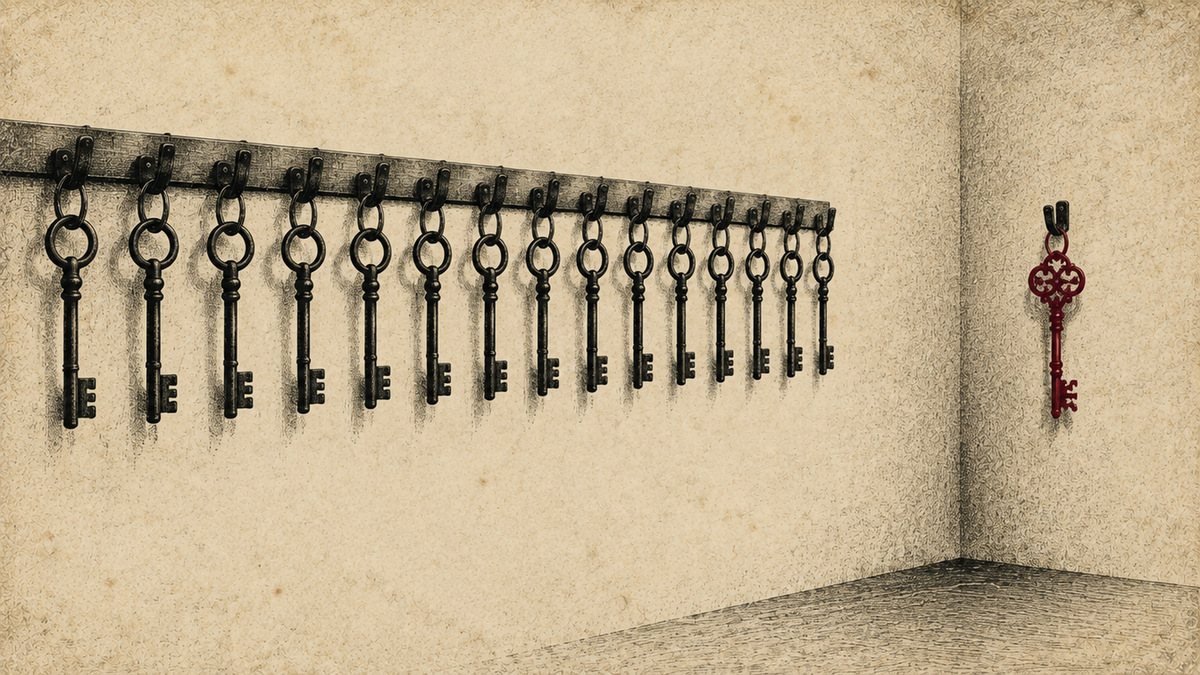
Competition can become a race to the bottom. The key is to find organizations whose products or services are hard to copy, difficult to replace, and more valuable the longer customers use them.
What is competition? It's a question I've been asking myself lately. In business, it means two or more companies offering the same or nearly identical product or service and competing for a finite share of the market. Nothing new to anyone in business.
When you manage several companies, each in a different market selling different things, it's easy to get caught up in the micro: running the business and dealing with its problems instead of considering the bigger picture. Why own this business? What advantage does it have in its market? Why is it part of the portfolio? The usual questions come up too: Do we have the right people running each company? As Jim Collins puts it, do we have the right people on the bus and in the right seats, and have we cleared the bus of those who don't fit? What's the plan for this company? Are we building the future we want for it? Etc., etc., etc.
No, the question on my mind is: Is the owner's capital invested in the right company? And more than that, why compete? Why should I accept the notion that competition is good?
Business is hard enough as it is, especially when you're trying to build something great—something that lasts, with a strategy shaped by the holding company's worldview and a plan that goes beyond quarterly sales and meeting covenants. To me, those things are necessary for compliance, but they can become distractions—one more thing to worry about. They add no value.
This led me to Peter Thiel's Zero to One. Whatever controversies you may associate with the author, I don't pay attention to them; I focus on the substance. If I find a perspective compelling, I stick with it, and I find his views on competition especially compelling. In his view, competition is a race to the bottom: someone will eventually offer a lower price, and you may end up fighting in an overcrowded market. Instead, aim for a monopolistic edge—a product or service so unique that no other company can offer a close substitute. In other words, don't buy, invest in, or build a business whose whole objective is to do what others do, slightly better.
Thiel proposes a "creative monopoly": solving a problem in an addressable market so well that no one can offer or develop a close substitute. The goal is to excel in a niche and capture a large share of a clearly defined, narrow market—one small enough to dominate. It's about the unique value a company offers its customers, something they can't get anywhere else. The best way to deliver it, of course, is proprietary technology that makes the offering difficult or impossible to copy.
I see many companies talking about brand, and I believe building a strong one can help create a dominant position. But brand alone isn't enough. A company needs a compelling difference that lets it play in a different pond. That's where you want to be.
Not every company needs new technology. In a holding company, a creative monopoly can come from how the business runs: a way of operating no one else has, skills that are hard to find, service customers can always count on, a channel competitors can't get into, deep expertise, or customers who keep coming back. What matters is that no one can easily offer the same thing.
So here are two questions I ask when I think about a business. The first is Jim Collins's test for a great company:
What would customers lose if your company disappeared?
Can anyone else reproduce what you offer?
The point isn't to achieve an absolute monopoly as Zero to One defines it. If that's what you build, or find to invest in, that's the ultimate goal, isn't it? Nevertheless, capital should go to businesses that have earned the right to exist. They solve a problem no one else in their market solves, customers can't easily replace them, and their edge gets harder to copy as they grow.
That's the standard I'd apply to every company in a portfolio. Forget "Can it compete this quarter?" Ask what makes the business hard to replace, hard to copy, and worth owning for the long term.
If an owner can't answer that clearly, how hard the company competes doesn't matter. Competing may be the problem.