Leadership 2 min read
Pirates
When two finalists are equal on paper, ask which one is a pirate: goal-driven, comfortable with risk, willing to find the unconventional answer.
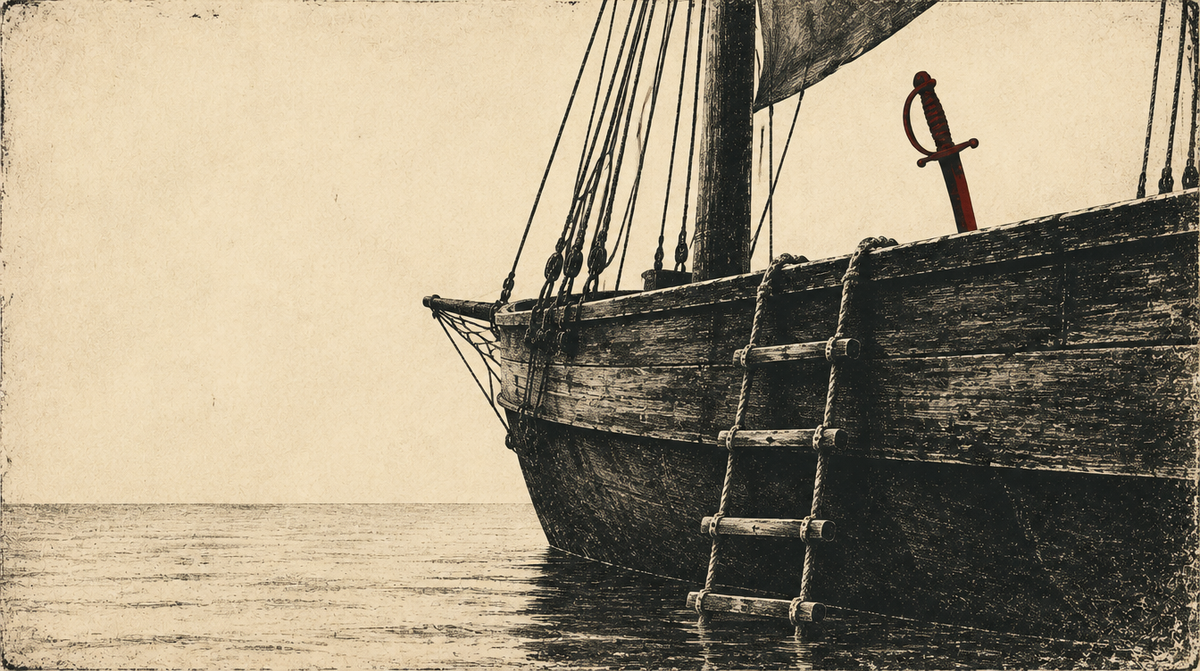
The team sat down to discuss the two final candidates. Both were qualified. On paper and in the interviews, it was a toss-up. In the middle of the back and forth, the question was asked: "Of the two candidates, who do we see as a real pirate of old?" The team knew what the question meant. They had gone through the same process themselves. On a small team working in close proximity, attitude carries weight, and the real discussion happens beyond the technical rounds. It's about who embodies the characteristics pirates had.
When I think of pirates, I think of people who bend the rules and look for unconventional answers. They don't fit the norm. They have a rebellious streak they can lean on when the standard answers stop working. They are not afraid to take chances. Here are the traits I look for.
Pirates were relentlessly goal-driven. They could endure long stretches of boredom and danger because the prize mattered. The people I look for have a strong sense of purpose. They care about the outcome, not just the tasks. They push through ambiguity, setbacks, and politics to ship the work. They stick with hard, messy problems instead of passing the buck. Being a pirate meant living with the trade-off between the value of capturing a ship and the danger of boarding it. I want someone comfortable with uncertainty who can still assess risk against the objective at hand.
Pirates lacked resources. They improvised tactics, tools, and alliances. The candidates I look for are comfortable being handed an objective under constrained time, budget, and people. They defy common wisdom. "How it's always been done" is one way, not the only way. They challenge assumptions respectfully and call out pointless rules. They lean toward shared ownership rather than command-and-control.
Pirates did business with a knife clenched in their teeth. Today that means knowing where the ethical boundaries are. The people I want will do the right thing with pirate energy.
When deciding who boards the ship, the conversation cuts clear. The wrong person kills the momentum, and the team refuses to let that happen. By the time the question gets asked, the team already knows the answer. It just needs naming.